advertisement
Building a Robot from Scratch: Project Outline
Projects should be fun, entertaining and educational. Last year, my projects focused on two areas: DevOps with Ansible, Nomad, and Kubernetes. Development of Web Applications with HTML, CSS and JavaScript frameworks. For some time now I have had another interesting area in mind: robots. It's amazing what other enthusiasts have created, it's inspiring to see a self-made wheeled robot with a laser sensor to drive and explore its surroundings.
This article originally appeared on my blog.
Motivación para un robot hecho a sí mismo
This year I want to build a pickup and delivery robot that will help me maintain my house, specifically my terrace. The functions of the robot are to scan the environment by moving, identify objects, pick them up and drop them in a designated area. The robot must be autonomous, which means actively mapping its environment, orienting itself and moving, while following its goals and actively deciding the best approach and order to solve its tasks.
From this description it is clear that the project combines different aspects of robotics: assembly of a robot with chassis, motors and sensors. Allow the robot to access variable sensor data. Provides the robot with the ability to move and search for objects. And finally, program the robot to track goals and decide the best approach to achieve them.
Therefore, the goal of “build a robot” can be divided into different subprojects. Ideally, each subproject results in a robot prototype that meets its current feature goals. By combining the subprojects, you should have a robot with all the characteristics described. Para mí, el viaje es la meta. I assume that some subprojects will take a long time to finish, with several cycles of "trial and fail" until you have the necessary knowledge and skills. Este viaje será realmente interesante.
Subprojects
The overall robot project will be divided into the following subprojects.
1. Elementos esenciales: software y hardware
The first project investigates the state of the art in robot programming. It should answer questions like what frameworks exist for building robots? Can these frameworks support different computing hardware (e.g. Arduino or Raspberry Pi) or do they require proprietary hardware? Also, what are the main concepts of programming a robot, including an eigenmodel, access to sensor data, motion, and more?
Similarly, I will investigate the hardware side: What are the components of a robot? What tools do you need to assemble a robot? ¿Qué opciones de movimiento existen? What type of sensors are available and which of them are useful? ¿Cuánto cuestan los componentes y el sensor? Are they interoperable or do you need to explicitly purchase hardware from one brand?
After this phase of the project, I need to understand the landscape of robot programming and know the hardware needed to design the robot. Then I can start assembling and building the robot feature by feature.
2. Robot in motion
In this phase, I will order all the necessary robot parts (chassis, motors, motion system, sensors) and design a home workbench with all the necessary assembly tools. Then I will build the robot step by step and learn how to control it.
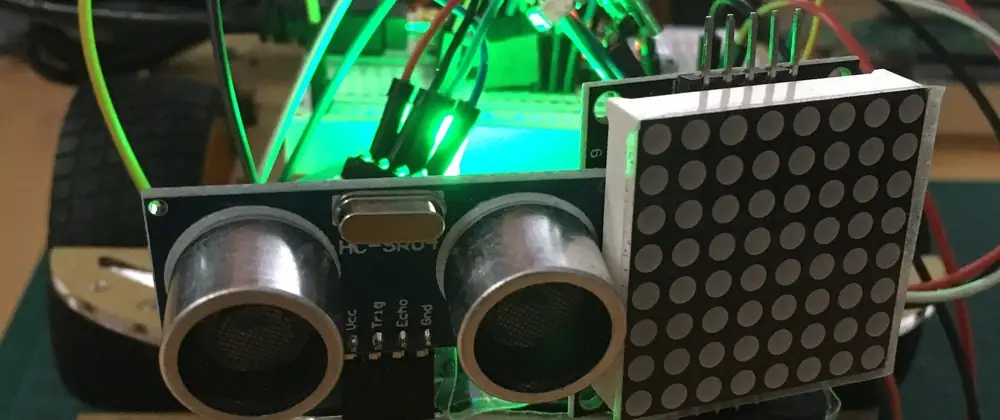
Source: https://create.arduino.cc/projecthub/MyPartsChest/autonomous-arduino-mega-track-robot-10699d
Controlling the robot is a fascinating area in itself. The simplest method is to send terminal commands to the robot that are easily interpreted. More sophisticated is to use a remote device, for example an IR, to send continuous data to the robot.
Con esta fase comenzaré algo muy nuevo. I do not have any experience in assembling electronic parts. Therefore, I also anticipate that this phase may last much longer than expected. Y para ver y resolver muchos errores.
3: Simulation
in this
advertisement
Related Articles



advertisement